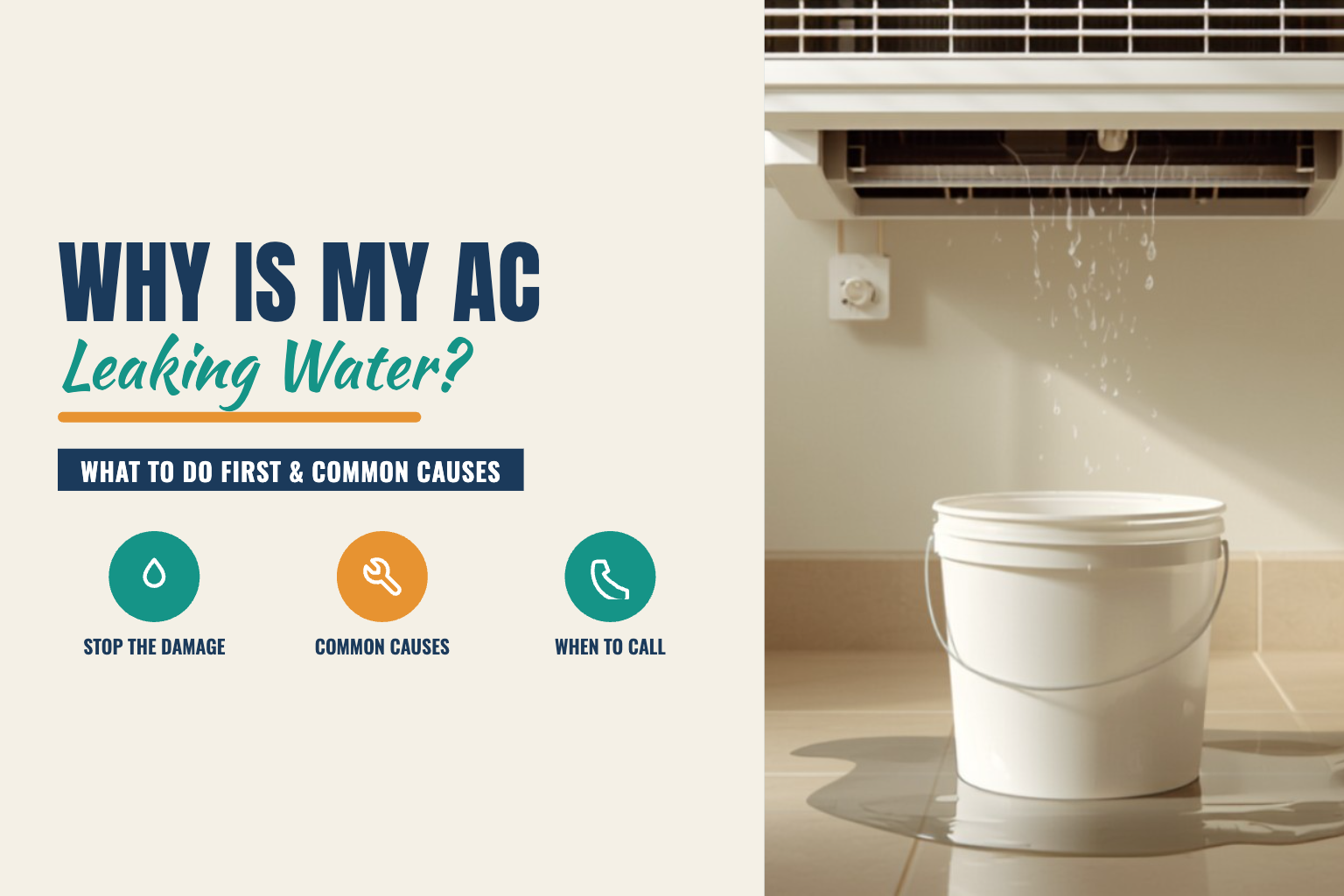
You spot a water stain spreading on the ceiling, or a puddle around the indoor unit in the garage or closet. In South Florida, an air conditioner that leaks water is one of the most common service calls we get all summer, and it is one you want to deal with quickly. Water damage gets expensive fast, and in our humidity, damp drywall can start growing mold within a day or two.
The good news is that the most common cause is simple, and there are steps you can take right now to stop the damage before a technician arrives.
What to Do Right Now
- Turn the system off at the thermostat. Running it will keep producing water and make the leak worse.
- Soak up standing water immediately. Towels for small puddles, a wet/dry vacuum for bigger ones. The faster the area dries, the less chance mold gets a foothold.
- Check the drain pan under the indoor unit. If it is full or overflowing, you have likely found your problem, and it is probably the drain line.
- Move anything valuable away from the unit. Boxes, stored items, and electronics near an air handler in a closet or garage are the first casualties.
The Most Common Causes of an AC Leaking Water
1. A Clogged Condensate Drain Line
This is the cause in the large majority of cases we see in Broward County. Your AC pulls gallons of moisture out of the air every day, and all of it exits through a small PVC drain line. In Florida heat and humidity, algae and sludge grow inside that line year round. When it clogs, water backs up into the drain pan until it overflows into your ceiling, wall, or floor.
Some homeowners can clear a minor clog themselves: find the drain line access near the indoor unit, and pour in a cup of white vinegar to break down algae. Doing this monthly is one of the best habits a Florida homeowner can have. A fully blocked line needs to be vacuumed or blown out with professional equipment.
2. The Float Switch Did Its Job
Many systems have a small safety device called a float switch that shuts the AC off when the drain pan gets too full. If your AC stopped running and you found water nearby, the float switch probably prevented a much bigger mess. Do not keep resetting the system to force it to run. Clear the drain problem first.
3. A Frozen Evaporator Coil That Melted
A dirty filter, low refrigerant, or a failing blower can cause the indoor coil to ice over. When the ice melts, it produces far more water than the drain pan is designed to handle. If you saw ice on the unit before the leak, or your vents were blowing warm air first, this is the likely story. Our guide on why an AC blows warm air covers the same underlying causes.
4. A Rusted or Cracked Drain Pan
Drain pans on systems more than 10 years old rust through, especially in coastal air. If the pan itself is compromised, water drips no matter how clean the drain line is. Pans can sometimes be replaced on their own, but heavy rust is often a sign the whole unit is nearing the end of its life.
5. A Failed Condensate Pump
Some installations, especially in garages or interior closets below the drain line’s exit point, use a small pump to push water out. If the pump fails, water collects and overflows. Pumps are an affordable repair when caught early.
6. An Improperly Installed or Sloped Drain Line
If the leak started shortly after an installation or a renovation, the drain line may not have enough downward slope to carry water away. Water sits in the line, breeds algae faster, and backs up repeatedly. This is a fix worth having done right once instead of clearing clogs forever.
Is Water From the AC Dangerous?
The water itself is just condensation, the same as what drips from a cold glass of iced tea. A clogged drain can also leave your home feeling humid even with the AC running. The danger is what it does: soaked drywall, warped flooring, ruined insulation, and mold growth. In South Florida humidity, mold is the real cost of an ignored leak, and remediation can run into the thousands. Treat any recurring leak as urgent even if the puddle looks small. A persistent damp smell from the vents is often the first warning sign, and our guide on why an AC smells musty explains what that odor means.
How to Prevent AC Leaks in Florida
- Pour a cup of vinegar into the drain line monthly to keep algae from taking hold.
- Change your filter every one to two months so the coil never freezes from poor airflow.
- Get a professional tune-up at least once a year. A proper HVAC maintenance visit includes flushing the drain line, checking the pan and float switch, and catching rust before it becomes a hole.
Frequently Asked Questions
Can I keep running my AC if it is leaking water?
It is not worth the risk. Every hour it runs adds more water. If the leak is from a frozen coil, running the system can also damage the compressor. Shut it down and get the cause fixed first.
Why does my AC drain line keep clogging?
Florida heat and humidity make drain lines an ideal environment for algae. Lines that run long horizontal stretches, have poor slope, or never get flushed will clog again and again. Monthly vinegar treatments and an annual professional flush break the cycle.
Does homeowners insurance cover water damage from an AC leak?
Sudden and accidental damage is often covered, but damage from long-term neglect usually is not. That distinction is exactly why it pays to address a leak the day you notice it and to keep records of regular maintenance.
How much does it cost to fix an AC water leak?
A straightforward drain line clearing is one of the more affordable AC repairs. Costs rise with drain pan replacement, condensate pump replacement, or repairs to a frozen coil’s underlying cause. You will get an exact price after a diagnosis, and a reputable company will explain the problem before doing any work.
Stop the Leak Before It Becomes a Ceiling Repair
A leaking AC rarely fixes itself, and in our climate the clock runs fast. On Point Air Conditioning and Refrigeration provides 24-hour AC repair throughout Fort Lauderdale, Plantation, Lighthouse Point, and surrounding Broward County communities. We will find the source, fix it properly, and show you how to keep it from coming back.
Call (954) 687-4788, available 24 hours a day. Licensed Florida Contractor #CAC1821191.